

A few weeks before the 2024 presidential election, I got a text from a worried friend asking whether I thought I could ever win a Republican primary in the future if I publicly supported and voted for Kamala Harris. My reply was something like, “I don’t care about that. The country comes first. And besides, I’m not a Republican anymore — haven’t been for a long time.”
I went on to tell him that I thought the GOP deserved to be crushed at every level of government, and that there was no excuse for voting for any Republican these days other than those named Kinzinger, Cheney, or Romney. He didn’t send me many political texts after that.
His message, though, offered an interesting glimpse into the mindset of ambitious Republicans — those still trying to calculate how best to position themselves for a future in the party. It also raises a larger question: what will the GOP look like in the years ahead? And the Democrats? (Or, if those two parties disappear, whatever their successors will be.)
A lot of people have spent the past decade telling themselves that Trump was an aberration — that things would eventually snap back to “normal,” as it existed circa 2015. “2016 was a fluke. January 6th ended his career. DeSantis is the future. He’s pushing 80; actuarial tables will sort this out.” But things aren’t going back. Trump has changed American politics, probably permanently.
I want to sketch out what I think the contours of American politics might look like — in the best-case scenario — if and when we finally move past the current crisis.
First things first: I believe Donald Trump is a tyrant. He is waging war on our constitutional system, and, for all practical purposes, the American republic is no longer functioning as it should. He asserts the authority to set tax policy through tariffs and spending policy on his own. He has illegally sent people to foreign torture sites, appears to be edging toward a war with Venezuela, and is using the military, in my view, to threaten and intimidate political opposition in American cities. I wish I could be who I am by nature — the guy who says, “everyone calm down; things have been just as bad before, and we got through it. Everything always feels more dramatic in the moment than it really is.” But I can’t be that reasonable-sounding moderate floating above it all this time. Things are very bad. People should be far more alarmed than they are. And we are only about 9 months into this. (That said, the only legitimate opposition to Trump is peaceful and political. Congress could still end this tomorrow, at least in theory. Even the Founding Fathers — whom I deeply revere — spoke in the Declaration of Independence of “a long train of abuses and usurpations.” Let me be absolutely clear: I do not want, and would never support, any act of violence against Trump or his allies.)
A movement with a taste for blood, insurrection, lies, corruption, and a casual disregard for the rule of law is unlikely to suddenly rediscover its Adam Smith neckties or start waxing lyrical again about the Constitution. From Vice President Vance down to the local party activist, I think large swaths of the GOP want a Red Caesar: a leader who uses the power of the state to punish cultural enemies and silence dissent. As I said — times are very bad. But let’s imagine that we do move past this crisis with our mad would-be king. I admit it takes a generous leap of the imagination.
In broad terms, I believe the United States is converging with the rest of the world politically: the central axis of conflict will be between reactionaries and liberals.
It is necessary to set aside the familiar categories that have defined American politics for roughly the past half century. The ideological and institutional alignments that structured the “big government” versus “small government” divide are rapidly disintegrating. Despite their rhetorical antagonism, both major parties in the postwar era operated within a broadly shared consensus — one that was pro-market, pro-freedom, supportive of international engagement, and committed, however unevenly, to the maintenance of a welfare state.
In this sense, the period from roughly 1945 to 2021 can be viewed as a long parenthesis in American political development. The consensus forged in the aftermath of World War II — encompassing Cold War liberalism, the postwar economic order, and a limited but real bipartisan commitment to democratic norms — effectively closed with the events of January 6th. What has followed is the reemergence of older tendencies in American conservatism: protectionism, isolationism, and a growing hostility to pluralism and liberal democracy itself.
From this perspective, it was always somewhat anomalous that the United States sustained two parties broadly committed to market liberalism. During my years as a Republican, I often remarked to my left-leaning friends that, although we used the term conservative as a kind of shorthand, American conservatives were never truly conservative in the European, blood-and-soil sense. I would sometimes invoke Hayek’s famous essay, “Why I Am Not a Conservative.” I had no desire to defend social hierarchies or safeguard some imagined ethnic fatherland. What I sought to defend was the free market — arguably the most disruptive force in human history. It dissolves established social orders, overturns old industries, and gives individuals the autonomy to leave their communities behind and begin anew. There is, in truth, very little that is conservative, in the classical sense of the word, about any of that.
To my perhaps unjustified surprise, it is the Republican Party that has ultimately turned away from the ethos of market dynamism it once championed. The GOP has become, in practice, the party of tariffs, protectionism, and direct state involvement in private enterprise. The animating figure of the movement is no longer the risk-taking entrepreneur eager to disrupt entrenched industries and declare, “I built this,” but rather the disaffected industrial worker who longs for economic time to stop — for his company, his community, and his country to remain as he imagines they were in 1975. Likewise, the farmer who once measured success by expanding access to global markets now finds reassurance in government transfers and tariff protections.1 What was once a forward-looking, growth-oriented coalition has evolved into a backward-facing politics of preservation, animated less by faith in opportunity than by fear of loss.
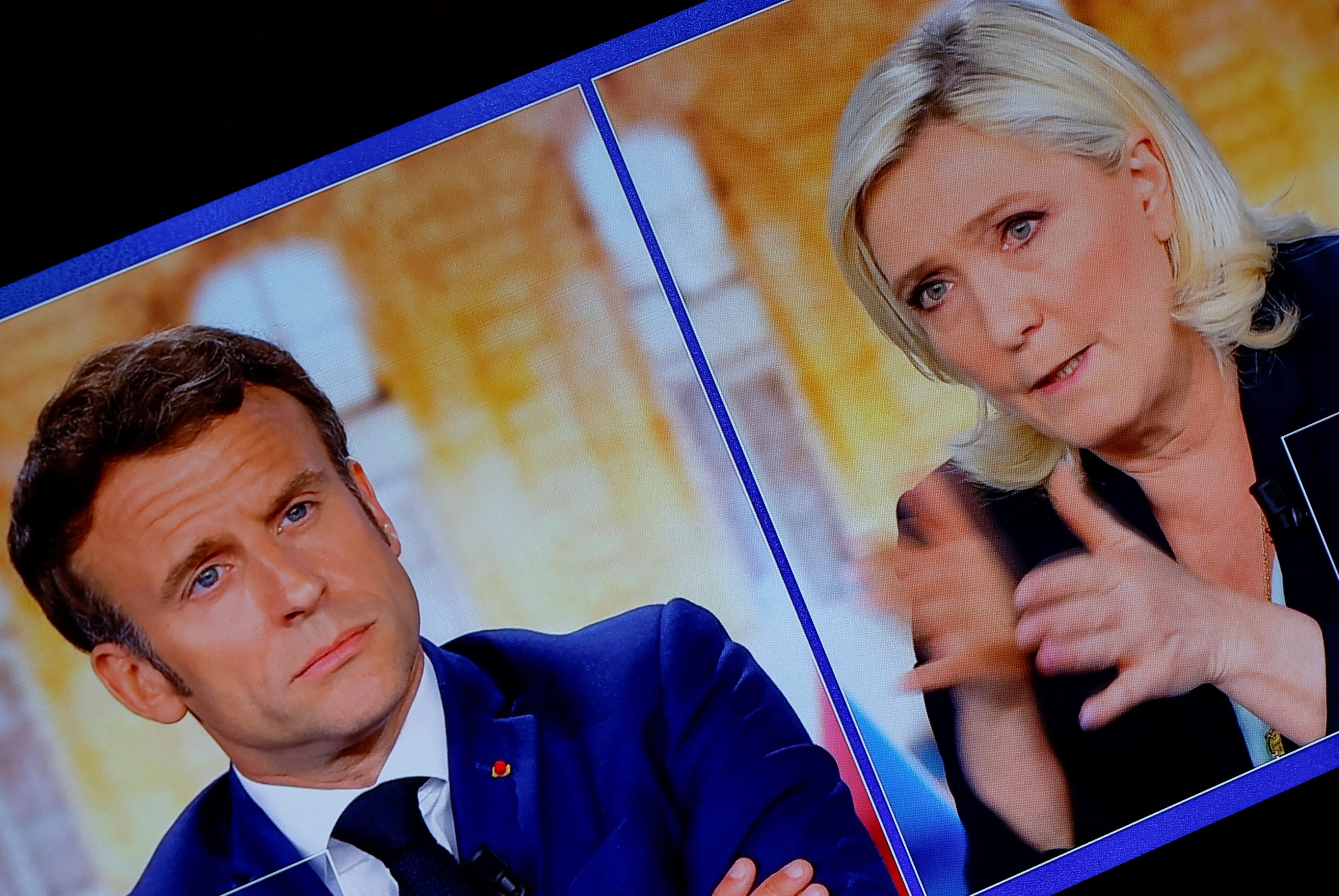
In the European context, this tendency finds its analogues in France’s National Rally under the Le Pens, Poland’s Law and Justice Party under the Kaczyńskis, and Hungary’s Fidesz under Orbán. These movements are not merely anti-market and anti-trade; they are also strikingly comfortable with expansive and inefficient welfare systems, so long as those systems are designed to serve their people. The definition of “their” is typically ethnocultural — a bounded community conceived in opposition to the cosmopolitan, urban elite who, in their rhetoric, “shuffle papers” rather than engage in productive labor.
Rather than debating how to foster economic growth and then equitably distribute its proceeds, these parties aspire to direct and control the economy through regulation, protectionism, and legal coercion — all justified as the defense of an imagined volk. It is unsurprising, then, that such movements prove receptive to Russian propaganda depicting the “decadent West” and a supposedly corrupt global order. The same populist mistrust of cities and intellectual life that animates their politics easily shades, as it has so often in European history, into antisemitism.
This, I believe, represents the future trajectory of the Republican Party. The most one can reasonably hope for is that it eventually rediscovers a basic respect for the rule of law — that when the electorate turns against it, the party accepts the results, refrains from falsifying them, and does not resort to mobilizing mobs against the institutions of government.
Italy’s Prime Minister, Giorgia Meloni, emerges from the same right-wing European tradition I have been describing, yet she has thus far remained firm in her support for Ukraine and NATO. On occasion, we in the United States may be similarly fortunate — finding, within the GOP’s ranks, leaders who maintain a residual commitment to the liberal democratic order. But more often than not, we should expect a politics characterized by economic populism and deference to Moscow’s narratives. There is a reason that Cold War–era Atlanticists such as Representative Mike McCaul are retiring, marginalized, or reversing their positions. It is, unmistakably, Tucker Carlson’s party now — not theirs.
Which brings us to the Democratic Party. It was always something of an embarrassment to those of us on the Republican side who prided ourselves on championing growth, innovation, and market dynamism that the most productive regions of the United States — the places where people most wanted to live — were also the most reliably Democratic. To be fair, most rank-and-file Democrats were not motivated primarily by enthusiasm for markets, but by familiar left-of-center concerns: equity, justice, and fairness. To the extent that they reflected on this economic–geographic paradox, it was usually as a rhetorical cudgel — a way to mock market-oriented Republicans like the person I once was.
There is a line often attributed to Winston Churchill: “Some see private enterprise as a predatory tiger to be shot. Others look on it as a cow to be milked. Only a handful see it for what it really is — the strong horse that pulls the whole cart.” If the Democratic Party hopes to become again the governing party of a dynamic, prosperous nation, it must become more comfortable with the free market — not only in policy, but in rhetoric and temperament. It must embrace dynamism both in the marketplace and within government itself, resisting the reflex to defend every policy, program, or bureaucracy simply because it already exists.
Part of the angst and uncertainty of the current moment lies in the fact that American politics has entered a new era — but only one party seems to have received the memo. The Democratic Party is still struggling to articulate a vision that meaningfully contrasts with a newly reactionary and anti-market GOP. For those who have spent years railing against “free-market fundamentalism” and other convenient straw men, it takes genuine effort to pivot toward arguing for a pro-growth regulatory regime, or even to defend the basic liberal principle that markets depend on the neutral and predictable application of the law. I am not suggesting that most Democrats oppose such ideas; rather, they have simply not been in the habit of speaking in those terms, or of exercising those rhetorical muscles.
There are, encouragingly, signs of such evolution for those willing to look closely — even in a party that often appears paralyzed by timidity and managerial incompetence. Negative polarization has turned many ordinary Democrats into Cato Institute-style free-trade radicals. Writers such as Ezra Klein and Derek Thompson have helped to spark what has been dubbed the “Abundance Movement” — a reformist impulse that, despite its progressive framing, adopts many of the classic free-market critiques of overregulation and scarcity politics.
There is indeed a political party in America today that celebrates the state’s direct ownership of private enterprise — but it is not the Democratic Party.
If a liberal pro-growth consensus is to take shape in the aftermath of Trumpism, it will require the Democratic Party to rediscover something that once defined the American tradition at its best: a belief that freedom and progress are mutually reinforcing. The market, for all its failures, remains the most effective mechanism for harnessing creativity, rewarding effort, and translating innovation into tangible improvements in human life. The left’s task, then, is not to restrain or moralize against this process, but to channel it — to ensure that the benefits of dynamism extend broadly enough to sustain the political legitimacy of the system itself.
This requires a shift in sensibility as much as in policy. It means treating economic growth not as a background condition to be redistributed after the fact, but as a moral good in its own right — one that expands the realm of human possibility. It means understanding that progress is not simply the reduction of inequality, but the enlargement of opportunity. If Democrats wish to lead the next political era, they must speak again in the language of confidence — of construction, experimentation, and abundance — rather than that of scarcity and suspicion.
As I said, there are early signs of such a turn. The emerging coalition around housing reform, permitting reform, and energy infrastructure suggests an embryonic politics of progress, a movement that recognizes that the state’s proper role is to enable building, not to obstruct it. This, if developed into a coherent governing philosophy, could form the backbone of a renewed liberalism: one that affirms markets as instruments of national vitality, while insisting that prosperity carries civic obligations. It would be a liberalism of dynamism — pragmatic, open to the world, and confident in its ability to adapt rather than retreat.
This may not be the ideal month to invoke Emmanuel Macron, but his En Marche party — later Renaissance — offers a useful European parallel. The same might be said of Donald Tusk’s Civic Platform in Poland, or even Mark Carney’s efforts to revive the Canadian Liberals. Analogies across nations always have their limits, but the Democratic Party must look beyond both the uninspired managerial progressivism of Hillary Clinton’s 2016 campaign and the unserious radicalism of Bernie Sanders.
In the end, the health of a democracy depends less on the defeat of its adversaries than on the vitality of its governing creed. If liberalism is to endure in America, it must relearn how to inspire — how to speak not merely in the language of caution and constraint, but of possibility. A generation of leaders on the right has abandoned the market and the liberal order it once defended, retreating into protectionism, resentment, and nostalgia. The task now falls to the center-left to carry forward the democratic experiment: to prove that pluralism, freedom, and growth are not mutually exclusive but mutually sustaining.
For all its flaws, the Democratic Party remains the only plausible vehicle for such a renewal. But renewal will not come through slogans about “equity” or “stewardship” alone. It requires a vision of progress that honors competence without descending into bureaucracy, that believes in government’s capacity to build, and that recognizes the moral worth of risk and ambition. A confident liberalism must treat the creative energies of the market as a partner in national flourishing -- not a tiger to be tamed or a cow to be milked.
If America can rediscover that balance — between freedom and fairness, aspiration and solidarity — it will not merely survive its present crisis; it will emerge stronger for having faced it. The real challenge of our time is not to recover the politics of the past, but to imagine a future in which democracy itself once again feels dynamic, capable, and worth believing in.
As with a lot of things written here, there is of course nuance. Farmers have been subsidized long before MAGA, and yes it is a complicated, two-party story.
Michael, a very good and well thought out analysis of political parties in this country. I once held to the ideals and platforms the Republican party espoused. I had voted Republican my whole life until I didn’t. In my 30s I trusted that Reagan’s trickle down economics theory would work. It didn’t. That only is viable if those at the top have a desire to open their purse strings, so to speak, and let the trickle start to happen. In reality, they diverted the trickle back to themselves. Now in my 70s I’ve been asking myself for the last 15 years, why does government exist except to help its citizens. I’m not talking about government hand outs but thoughtful and results based innovations and programs that can uphold and nurture our society. Your statement, “The emerging coalition around housing reform, permitting reform, and energy infrastructure…” is the kind of thinking this country needs. There are so many areas that need to be addressed but that’s a good place to start. We just need elected officials put in offices that champion such thinking. That’s the challenge then, isn’t it? The American people deserve nothing less. We certainly don’t deserve the broken political parties and systems currently in place. Thank you for writing this.
Many thanks for this very insightful piece. It is hard at this juncture to imagine that your proposed path to democratic renewal might be achievable. Yet history offers reasons not to despair. Other nations have flourished after overcoming catastrophe.